
Clinical trials play an important role in improving cancer prevention, diagnosis and treatment. For some patients, taking part may offer access to new therapies that are not yet widely available. Your care team can help determine whether a clinical trial may be an option and explain what participation involves.
Carefully Planned Radiation Therapy
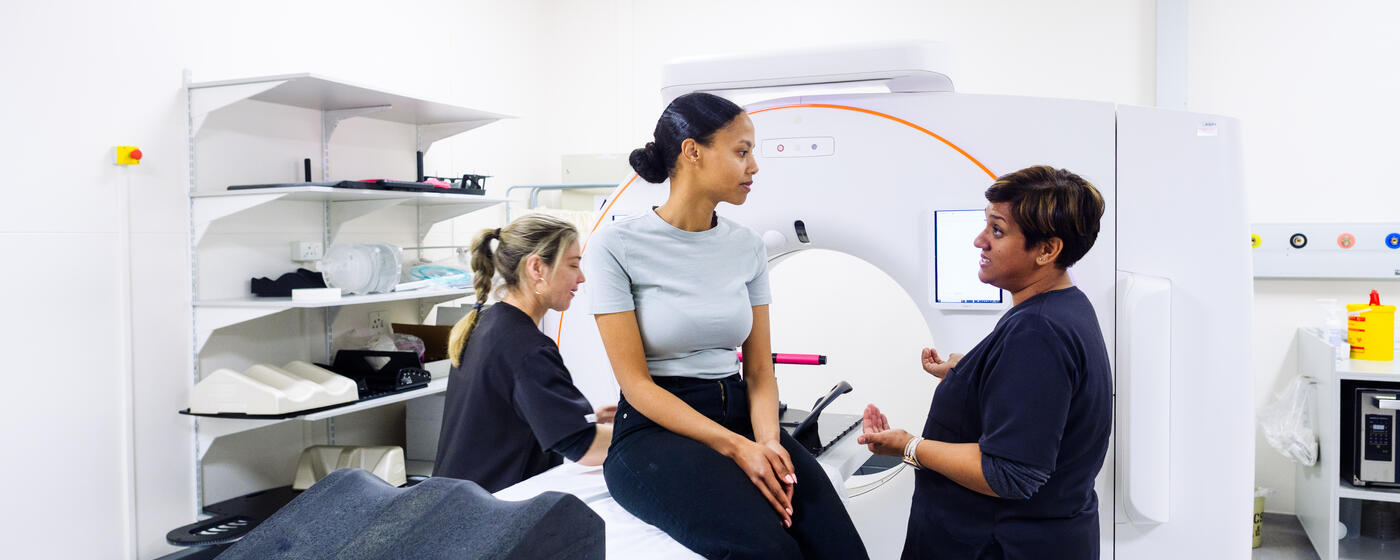
Radiation therapy is a powerful tool in cancer care, with more than half of patients receiving it as part of their treatment plan. It may serve as the primary treatment, support surgery or medication, or help relieve symptoms. In some cases, radiation therapy may also be used to treat noncancerous (benign) conditions.
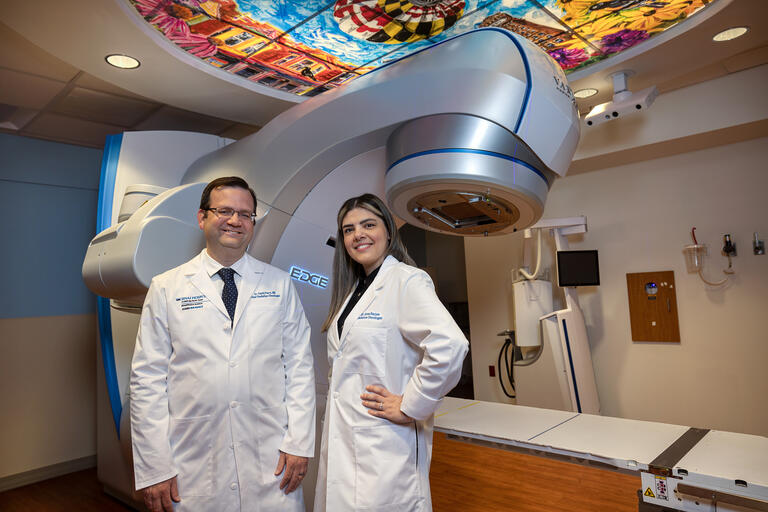
What sets radiation therapy apart is its precision, which allows care teams to focus treatment on specific areas of the body. At LifeBridge Health, this care is guided by experienced radiation oncologists who tailor treatment to each patient using a range of proven radiation approaches.
Our Approach
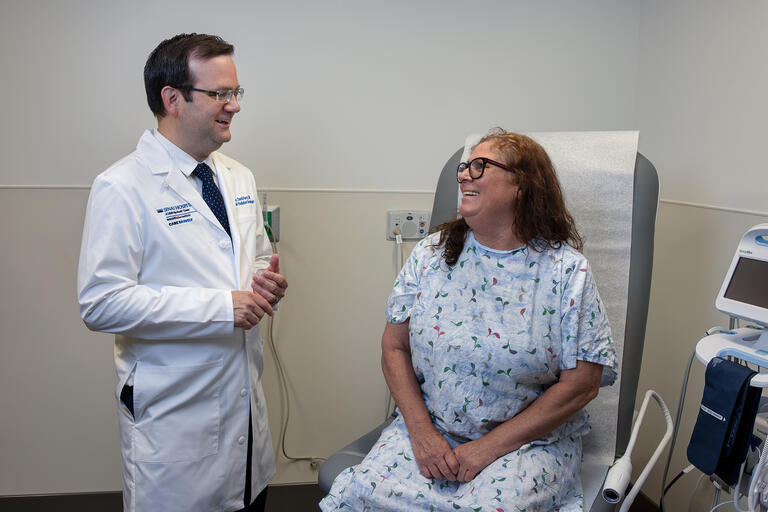
Radiation therapy is unique because it allows physicians and care teams to see patients almost every day during treatment. That consistency helps us get to know patients not just clinically, but as people.
Personalization and shared decision-making are central to cancer care across LifeBridge Health. Radiation oncologists work closely with you and the rest of your care team—including surgeons, pathologists, medical oncologists and nurse navigators—to understand your care plan and how radiation fits within it. Advanced imaging, modern technology and careful safety checks support this work, helping physicians tailor care to your diagnosis, anatomy, overall health and goals.
You’re supported at every step, so symptoms can be identified early, side effects addressed sooner and care adjusted as needed. Whether radiation is used to cure cancer, support other treatments, manage a benign condition or relieve symptoms, our goal is to deliver the most appropriate care as safely and effectively as possible.
Our Team

Our program is accredited by the American College of Radiology, meeting national standards for quality and radiation safety. Our physicians pair that technical expertise with compassionate, patient-centered care.


When Radiation Therapy May Be Recommended
Your provider may recommend radiation therapy to:
- Treat cancer
- Shrink tumors before surgery or other treatments
- Reduce the risk of cancer returning after surgery
- Control cancer growth when it cannot be fully removed
- Treat certain noncancerous conditions
- Relieve symptoms like pain, bleeding or pressure
Types of Radiation Therapy We Offer
Radiation therapy works by damaging cancer cells so they can no longer grow and divide. Different approaches may be recommended based on the cancer being treated, its location and how close it is to nearby organs. The goal in every case is to deliver an effective dose of radiation while limiting impact on healthy tissue.
LifeBridge Health offers a range of advanced radiation therapies to accomplish this, including external beam radiation therapy, stereotactic radiosurgery (SRS), stereotactic body radiation therapy (SBRT) and brachytherapy.
External Beam Radiation Therapy (EBRT)
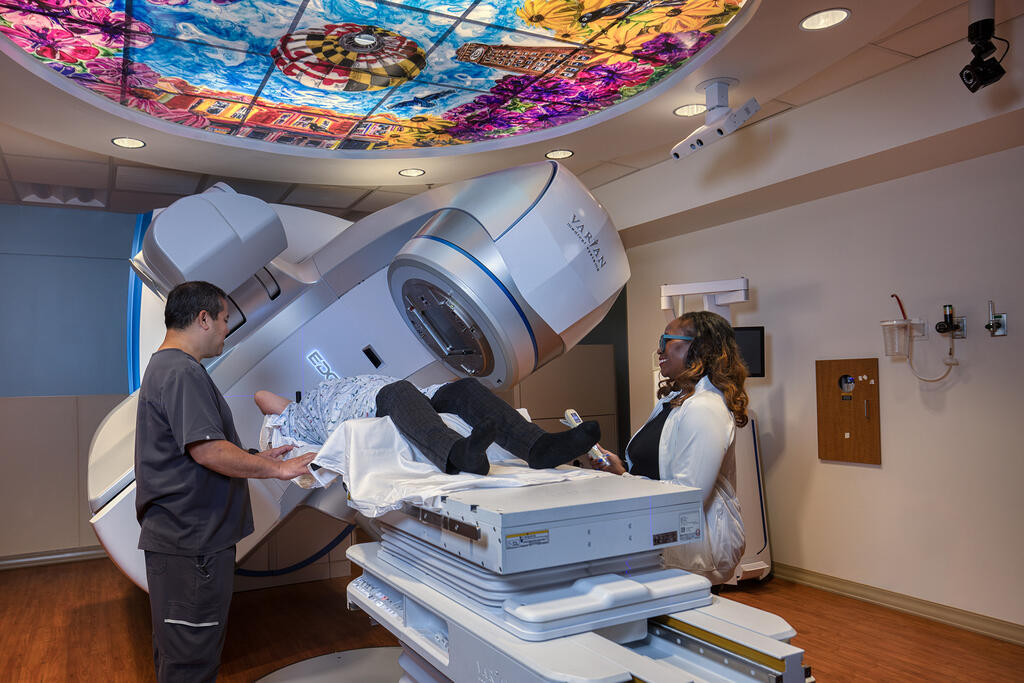
External beam radiation therapy treats cancer by directing focused radiation at a tumor from a machine outside the body, such as a linear accelerator. It is one of the most common approaches used in cancer care and can be adapted to different treatment goals.
Several advanced techniques may be used as part of EBRT:
- Intensity-modulated radiation therapy (IMRT) shapes radiation doses to match the tumor, allowing for stronger treatment while still protecting nearby organs
- Image-guided radiation therapy (IGRT) uses imaging before and during treatment to help confirm patient positioning and improve accuracy
- Stereotactic body radiation therapy (SBRT) delivers highly focused radiation in a small number of treatments, which may shorten the overall course of care
- Stereotactic radiosurgery (SRS) is a highly focused radiation treatment often used for certain brain tumors and other intracranial conditions
Using advanced image guidance, motion-management tools, and positioning technologies, care teams can treat tumors with a high level of accuracy—even near sensitive structures or in areas that may shift with normal movement, such as breathing.
Brachytherapy (Internal Radiation)
Brachytherapy delivers radiation from inside or very near the treatment area using applicators, thin tubes or other specialized devices. This allows radiation to be concentrated directly at the target while helping spare surrounding healthy tissue.
Types of brachytherapy offered may include:
- Interstitial brachytherapy, in which radiation sources are placed into or near the tumor using carefully positioned needles or catheters
- Intracavitary brachytherapy (vaginal cylinder brachytherapy), commonly used for gynecologic cancers, in which a specialized applicator is placed in the vagina to deliver targeted radiation to the treatment area
- Skin brachytherapy, used for select skin cancers and superficial lesions to help limit dose to deeper tissue
Brachytherapy may be used on its own or combined with external radiation, depending on individual treatment needs.
Additional Radiation Therapy Options
Depending on your diagnosis and treatment goals, other specialized approaches may be recommended:
- Electron therapy is often used for tumors or lesions near the surface of the skin
- Radiopharmaceutical therapy, coming soon to LifeBridge Health, uses radioactive medicines that travel through the bloodstream to target cancer cells, specifically certain prostate cancers
- Palliative radiation therapy focuses on relieving cancer symptoms such as pain, bleeding or pressure
- Low-dose radiation therapy may help relive osteoarthritis pain and improve mobility for patients who continue to have symptoms despite medications, physical therapy or joint injections
What to Expect
Radiation therapy requires careful planning, precise delivery and ongoing follow-up. While every treatment plan is unique, most patients go through a similar process.
Before Treatment
You will meet with a radiation oncologist to review your diagnosis and talk about whether radiation therapy is right for you. If it is, a planning visit is scheduled to capture detailed imaging, often using a dedicated CT simulation scan. This helps your care team determine the exact size, shape and location of the area being treated so therapy can be planned as accurately as possible. Additional imaging or breathing-motion assessments may be used depending on the area being treated.
During Treatment
Radiation therapy is usually given on an outpatient basis. Most patients receive treatment once a day, Monday through Friday, for several weeks. Some treatments, such as stereotactic treatments or palliative radiation, may be completed in fewer visits. Appointments are typically short, and you are closely monitored to make sure treatment is proceeding as planned.
After Treatment
After treatment is complete, follow‑up visits help your radiation oncologist check progress and plan next steps. Your care team remains available to answer questions, coordinate ongoing care with the rest of your providers and help manage side effects if they occur.
Cancers We Treat
Our radiation oncologists care for patients with a wide range of cancers, including:
Noncancerous Conditions Treated with Radiation
Radiation therapy may also be used to treat noncancerous conditions, including:
- Brain and nervous system conditions (such as meningioma, vestibular schwannoma, pituitary adenoma and trigeminal neuralgia)
- Arteriovenous malformations (AVMs)
- Joint or soft tissue conditions (such as osteoarthritis and Dupuytren’s disease)
- Keloids and other scar-related conditions
Treatment for noncancerous conditions is carefully considered based on diagnosis, symptoms, prior treatment and expected benefits.
Clinical Trials
Supportive Services
When you receive cancer care at LifeBridge Health, you have access to supportive services like counseling, integrative therapies and support groups. These resources are designed to help patients care for their physical and emotional well‑being throughout treatment and beyond.