
Clinical trials play an important role in improving cancer prevention, diagnosis and treatment. For some patients, taking part may offer access to new therapies that are not yet widely available. Your care team can help determine whether a clinical trial may be an option and explain what participation involves.
What is Lung Cancer?
Lung cancer occurs when cells in the lungs grow and divide uncontrollably. Over time, this process can form tumors that affect breathing and may spread to other parts of the body.
There are two main types of lung cancer:
- Non-small cell lung cancer (NSCLC): The most common type. It usually grows and spreads more slowly.
- Small cell lung cancer (SCLC): Less common but faster growing. SCLC is more likely to spread quickly to other organs.
Anyone can develop lung cancer. Smoking is the leading cause, but it is not the only one. Exposure to secondhand smoke, radon gas, air pollution and workplace substances like asbestos can also increase your chances of developing the disease.
Whether you’re concerned about your risk, noticing symptoms or have already been diagnosed, LifeBridge Health’s providers offer clear guidance, personalized care options and compassionate support at every step.
Lung Cancer Symptoms
Lung cancer often develops without noticeable symptoms in its early stages. Signs typically appear as the disease progresses or spreads.
Common symptoms of lung cancer include:
- A cough that doesn't go away and gets worse over time
- Constant chest pain
- Coughing up blood
- Shortness of breath, wheezing or hoarseness
- Repeated problems with pneumonia or bronchitis
- Swelling of the neck and face
- Loss of appetite or weight loss
- Fatigue
If you notice any of these symptoms—especially if they persist or worsen—it’s important to talk with a healthcare provider who can help determine the cause and guide next steps.
How Lung Cancer is Diagnosed
Early detection is critical for improving lung cancer outcomes. For people at higher risk, screening can help find cancer early, often before symptoms appear.
If screening or symptoms raise concern, your care team can use a range of tests to confirm a diagnosis and guide personalized treatment.
Screening
- Low-dose CT scan: Uses low levels of radiation to create detailed images of the lungs and help find cancer early.
You may be eligible for screening at LifeBridge Health if you:
- Are between 50 and 80 years old
- Smoked one pack per day for 30 years (or two packs daily for 15 years)
- Are a current smoker or quit within the past 15 years
- Have a family history of lung cancer
Diagnostic Imaging
- CT scan (computed tomography): Uses X-rays to create detailed images of the lungs and identify abnormal areas.
- MRI (magnetic resonance imaging): Uses a powerful magnet and computer to create detailed images of organs and tissues.
- Radionuclide scanning: Uses a small amount of radioactive material to help detect abnormal areas in the body.
Diagnostic Tests
- Bronchoscopy: A thin, lighted tube is passed through the nose or mouth into the lungs to look inside the airways and collect tissue samples.
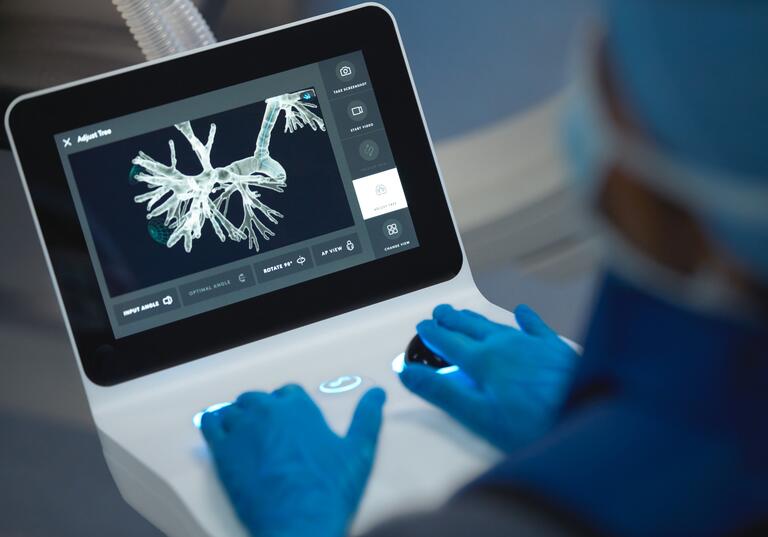
Ion Endoluminal System
Available at Northwest Hospital, the Ion robotic-assisted bronchoscopy system helps surgeons reach and biopsy very small or hard-to-access lung nodules with greater precision. Using an ultra-thin catheter that can navigate all 18 segments of the lung, including narrow peripheral airways, the system may help support earlier and more accurate lung cancer diagnosis.
- Biopsy: A thin needle is inserted through the chest to remove a small sample of tissue for testing.
- Thoracentesis: Fluid around the lungs is removed and checked for cancer cells.
- Thoracotomy: A surgical procedure to open the chest, sometimes used when other tests cannot provide a clear diagnosis.
Lung Cancer Treatment Options
Whether you receive care at the Alvin & Lois Lapidus Cancer Institute or the William E. Kahlert Regional Cancer Center, your treatment is guided by a team of specialists. Surgeons, pulmonologists, medical oncologists and radiation oncologists collaborate closely—often meeting with you and your family through our multidisciplinary clinic—to create a unified, personalized care plan.
Depending on your diagnosis, overall health and goals for treatment, this plan may include:
Surgery
Surgery may be used to treat lung cancer, most often when it is found at an earlier stage. The exact approach depends on the size and location of the tumor.
- Resection (segmental or wedge): Removes a small part of the lung
- Lobectomy: Removes one section (lobe) of the lung
- Pneumonectomy: Removes an entire lung
Surgery may not be the best option if the cancer is too advanced or if you have other health concerns.
Chemotherapy
Chemotherapy uses medication to kill cancer cells or slow their growth. It may be used alone or combined with other treatments to shrink tumors, lower the risk of recurrence or relieve symptoms.
Radiation Therapy
Radiation therapy uses high-energy beams to target and destroy cancer cells. Advanced techniques—such as stereotactic body radiation therapy (SBRT), 4D CT imaging and gated delivery—allow for highly precise treatment that adapts to your breathing and help limit exposure to healthy tissue.
Immunotherapy
Immunotherapy uses medication to help the immune system recognize and attack cancer cells.
Targeted Therapy
Targeted therapy uses drugs that focus on specific changes in cancer cells that help them grow. This approach helps limit damage to healthy tissue.
Clinical Trials
Supportive Services
When you receive cancer care at LifeBridge Health, you have access to supportive services like counseling, integrative therapies and support groups. These resources are designed to help patients care for their physical and emotional well‑being throughout treatment and beyond.