
A Day in the Life at Center for Hope
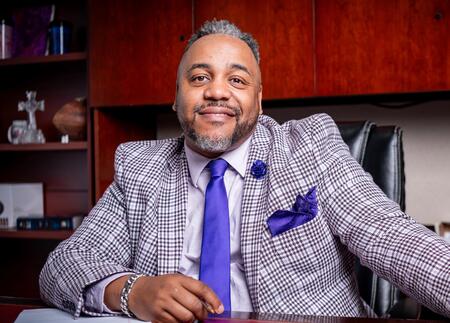
Center for Hope’s A Day in the Life series highlights the dedicated professionals who support individuals and families affected by trauma, violence and loss. Center for Hope (CFH) serves as a beacon for those facing difficult times, offering essential advocacy, counseling and resources. In this series, we explore the work and perspectives of the team members who contribute to CFH’s mission every day.
Today, we meet James Dixon, a Community Violence Intervention program manager who co-leads several Safe Streets sites across Baltimore City. In his role, he ensures that frontline staff have the guidance and resources they need to build trust, interrupt violence and save lives.
Q1. Who are you, and what do you do at Center for Hope?
A. My name is James Dixon, and I serve as one of the Community Violence Intervention program managers overseeing the Safe Streets program at Center for Hope. In total, there are 10 Safe Streets sites throughout Baltimore City. Four sites—Brooklyn, Cherry Hill, Penn North and Sandtown—are managed by Catholic Charities. The other six—Woodbourne-McCabe, Belvedere, Belair-Edison, McElderry Park, Franklin Square and Lower Park Heights—are managed by LifeBridge Health. I, along with Jarma "Marty" Henson, co-manage these six sites.
My role is administrative in nature. Through oversight, I ensure that Safe Streets team members remain compliant with grant funding standards and achieve operational excellence on a daily, weekly and monthly basis.
Q2. What does “hope” mean to you in the context of your role?
A. As a manager of Community Violence Intervention programs, hope at its core simply means saving lives. Safe Streets differs from many programs in that the daily interactions our violence interrupters have with high-risk individuals (HRIs) are designed to bridge the gaps that exist in impoverished communities. These interactions build trust and create links to essential resources that help change the thinking norms of communities, families and individuals surrounding violence.
Violence is not normal, and the brave men and women of the Safe Streets program share this message every day. For me, hope is about empowering them to do their jobs as effectively as possible.
Q3. What’s the most rewarding part of your day?
A. The most rewarding part of my day is knowing that the sites have what they need to be successful. Supporting their process and freeing them up to do their jobs more effectively gives me all the satisfaction I need as a manager. Seeing sites stay compliant with grant standards and save lives at the same time is an added bonus.
Q4. What would you say to someone who is interested in joining your team?
A. Safe Streets relies on individuals uniquely skilled to mitigate and prevent the spread of street violence. Because the work requires trust and loyalty from HRIs, it is not for everyone. I would encourage anyone interested in joining our team at Center for Hope to reflect seriously on whether this work aligns with their passion and purpose.
The work of Safe Streets is not simply a job, but a calling. It is both challenging and deeply rewarding. Being part of the Center for Hope family gives you the opportunity to support individuals during some of their most vulnerable and traumatic moments. Advocating for those who are often forgotten or overlooked in our society can give you a sense of pride in knowing you were there for your community in a time of need.
Community violence work requires patience, empathy and cultural sensitivity. Safe Streets works to make a positive community change among individuals who, at times, do not know or understand what community change looks like. While the work is mentally, physically, emotionally and spiritually demanding, the fulfillment that comes from seeing lives changed and saved is truly unfathomable.
If you are passionate about making a difference and committed to continuous learning, you’ll find a welcoming and supportive environment here.