
A Day in the Life at Center for Hope
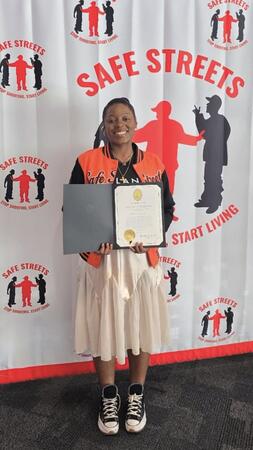
Welcome to A Day in the Life at Center for Hope, a blog series highlighting the dedicated professionals who support individuals and families affected by trauma, violence and loss. Center for Hope (CFH) serves as a beacon for those facing difficult times, offering essential advocacy, counseling and resources. In this series, we explore the work and perspectives of those who contribute to CFH’s mission every day.
Today, we meet DeAshia Gibbs, a violence prevention coordinator (VPC) for Safe Streets, the flagship community violence intervention program under LifeBridge Health. DeAshia shares how she defines success, what inspires her to stay committed to this work and the meaningful partnership she has with her site director as they serve their community together.
Q1. Who are you, and what do you do at Center for Hope?
A. My name is DeAshia, and I work as a VPC for Safe Streets, the flagship community violence intervention program under LifeBridge Health.
Q2. How do you define success, personally or professionally?
A. Success, to me, is alignment — when my actions match my values and create impact.
Personally, it means having peace, strong relationships and the freedom to grow into the best version of myself.
Professionally, it’s using my skills to make a tangible difference in people’s lives while continuing to learn and level up.
Q3. What inspires you to keep doing this work every day?
A. What inspires me is knowing that what I do creates real change for people who often feel unseen. Every day, I’m reminded that even small efforts can shift someone’s path. That keeps me grounded, motivated and committed to showing up, no matter how hard it gets.
Q4. Who do you work closely with, and how do you support one another?
A. I work very closely with my site director, Kennard. We support each other by creating space to teach and learn from one another, always keeping the mission and model in mind so we can be as effective and efficient as possible for our community.
Beyond the work, we also see and support each other as people. We check in on one another’s mental health, families and overall well-being.