Printer Friendly Version Print this Page Email A Friend Email to a Friend Increase Text SizeDecrease Text Size Font Size


Cancer Types - Breast Cancer

Breast cancer is the second most common cancer diagnosed in women. It is the leading cause of cancer death in women aged 15-55 years. LifeBridge Health offers screening, diagnostics and the full array of treatment options to detect and treat breast cancer effectively.


Pop-up blockers will need to be disabled to view the animations.
For more 3D Medical Animations click here.


Screening and Diagnosis

Breast cancer diagnosis involves the use of screening tools. Three screening methods are commonly used to detect breast cancer and are utilized at the Herman and Walter Samuelson Breast Care Center at Northwest Hospital:

1. Breast Self-Exam (BSE) – When a women checks her own breasts for lumps or anything that seems unusual.


Pop-up blockers will need to be disabled to view the animations.
For more 3D Medical Animations click here.

2. Clinical Breast Exam (CBE) – When a doctor or other health professional examines a woman's breasts by carefully feeling the breasts and under the arms for lumps or anything that seems abnormal.

3. Mammogram – An X-ray of the breast that may be used to detect tumors that are too small to feel by breast self-exam or by clinical breast exam.


Treatment

Breast cancer treatment may include four different types of therapies. Each person's treatment may vary and consist of one or a combination of these therapies.

1. Surgery
Many patients with breast cancer have surgery to remove the cancer from the breast. Some of the lymph nodes under the arm are usually removed and examined under a microscope to see if they contain cancer cells. LifeBridge Health has many surgeons who offer state-of the-art treatment for all solid tumors. Surgical procedures include:


  • Lumpectomy: A surgical procedure to remove a tumor (lump) and a small amount of normal tissue around it.

  • Partial mastectomy: A surgical procedure to remove the part of the breast that contains cancer and some normal tissue around it.

  • Sentinal node biopsy: A biopsy of a specific lymph node or nodes that are the first to drain the breast and collect cancer cells.

  • Lymph node dissection: A surgical procedure to remove some of the lymph nodes under the arm for biopsy.

  • Total mastectomy: A surgical procedure to remove the whole breast that contains cancer. Some of the lymph nodes under the arm may be removed for biopsy at the same time as the breast surgery; sometimes lymph nodes are removed later.

  • Modified radical mastectomy: A surgical procedure to remove the entire breast that contains cancer, many of the lymph nodes under the arm, the lining over the chest muscles and sometimes part of the muscles in the chest wall.

  • Radical mastectomy: A surgical procedure to remove the breast that contains cancer, chest wall muscles under the breast and all of the lymph nodes under the arm.

Treatment given after surgery to increase survival is called adjuvant therapy. This may be a combination of radiation therapy, hormone therapy and/or chemotherapy.

2. Radiation therapy
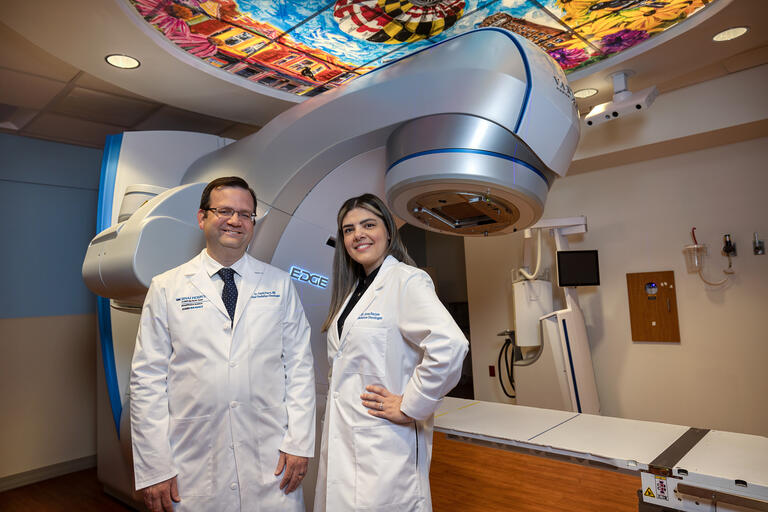
Radiation therapy is a localized cancer treatment that uses high-dose X-rays or other types of radiation to kill cancer cells. The LifeBridge Health Radiation Therapy Centers provide the most advanced radiotherapy for many cancers.


3. Chemotherapy
Chemotherapy is a cancer treatment that uses drugs to stop the growth of cancer cells, either by killing the cells or by stopping the cells from dividing. The way the chemotherapy is given depends on the type and stage of the cancer being treated. Medical Oncology/Hematology at Sinai directs the chemotherapy program throughout LifeBridge Health, and most patients receive chemotherapy at one of the LifeBridge Health Infusion Centers at Northwest and Sinai Hospitals.


Pop-up blockers will need to be disabled to view the animations.
For more 3D Medical Animations click here.


4. Hormone therapy
Hormone therapy is a cancer treatment that removes hormones or blocks their action, inhibiting cancer cell from growth. An example of hormone therapy is Tamoxifen.


Breast Cancer definition

Clinical Trials

Clinical trials are human research studies conducted with patients who volunteer to participate. These studies test safe and effective ways to prevent, screen, diagnose and/or treat a disease. The goal of clinical trials is to determine if the new treatment is better than the standard treatment for a specific disease.

For trials currently available to breast cancer patients click here.


Physicians

Surgeons
Dawn J. Leonard, M.D., medical director, Herman & Walter Samuelson Breast Care Center
Alan Davis, M.D.
Marc H. Gertner, M.D.
Gary Hamamoto, M.D.
Miles Harrison, M.D.
David S. Shear, M.D.


Medical Oncologists

Marvin (Jack) Feldman, M.D.
David Riseberg, M.D.
Cristina I. Truica, M.D.


Radiation Oncologists
Jeanette Linder, M.D., chief, Department of Radiation Oncology
Cardella Coleman, M.D.

The Herman and Walter Samuelson Breast Care Center at Northwest Hospital
Northwest Hospital's Herman & Walter Samuelson Breast Care Center is a comprehensive service offering screening and diagnostic tests as well as treatment for breast cancer. Some of the most advanced technologies for the evaluation of breast disease in the Baltimore area are now found at our center. The center's highly trained team includes a dedicated breast surgeon, a dedicated radiologist, registered nurses and mammographers.

Outpatient Chemotherapy Infusion Services
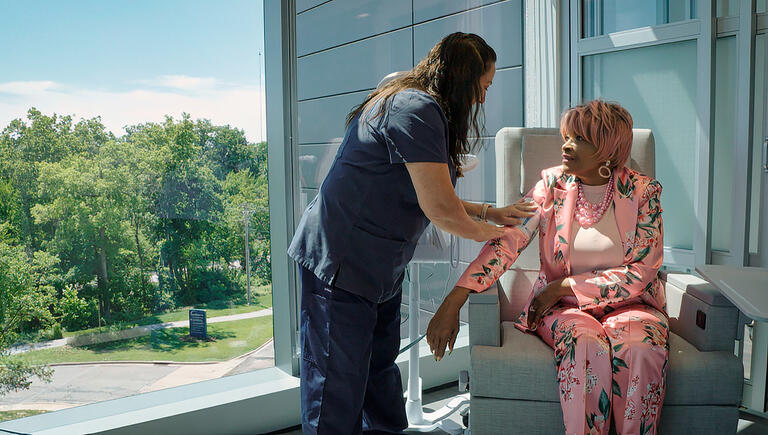
LifeBridge Health Infusion Centers are located at both Northwest and Sinai Hospitals. The Infusion Center at Northwest Hospital is newly built with a beautiful comforting environment overlooking a peaceful garden. The Infusion Center located at Sinai Hospital has been designed for patient comfort with an elaborate aquarium found in the center. Both centers are staffed by oncology certified nurses and nurse practitioners.


Image Recovery Center
Undergoing treatment for cancer may take a toll on a patient's whole body. The specialists here know how to help cancer patients improve their self-image. The Image Recovery Center is led by the program's founder, Marianne Kelly. She is a cancer survivor and has been a professional hair designer for over 30 years. She is also certified in image consulting, makeup artistry and breast prosthesis fitting.


Find a Cancer Specialist


Back to the Top